
What should you check before buying a counter top water purifier?
In the 2026 residential water treatment market, which is projected to grow at a CAGR of 7.4%, consumer selection relies heavily on verified performance data rather than brand visibility. Statistics from independent testing laboratories indicate that 68% of countertop units fail to meet their advertised Total Dissolved Solids (TDS) reduction rates after the first 500 gallons of operation. Buyers must prioritize systems with NSF/ANSI 58 or 401 certifications, which validate the removal of emerging contaminants like PFAS and microplastics. Modern high-flow systems now offer 600 GPD to 800 GPD throughput, a significant technical jump from the 50 GPD average seen in 2020. Furthermore, checking the internal wastewater ratio is vital; industry-leading Counter top water purifier models now achieve a 3:1 or 2:1 pure-to-waste efficiency, reducing environmental impact. Assessing the micron rating of the RO membrane—ideally 0.0001 microns—ensures a 99.9% rejection rate of heavy metals like lead and arsenic, providing a measurable safety margin that standard carbon-based pitchers cannot physically provide in modern urban environments.
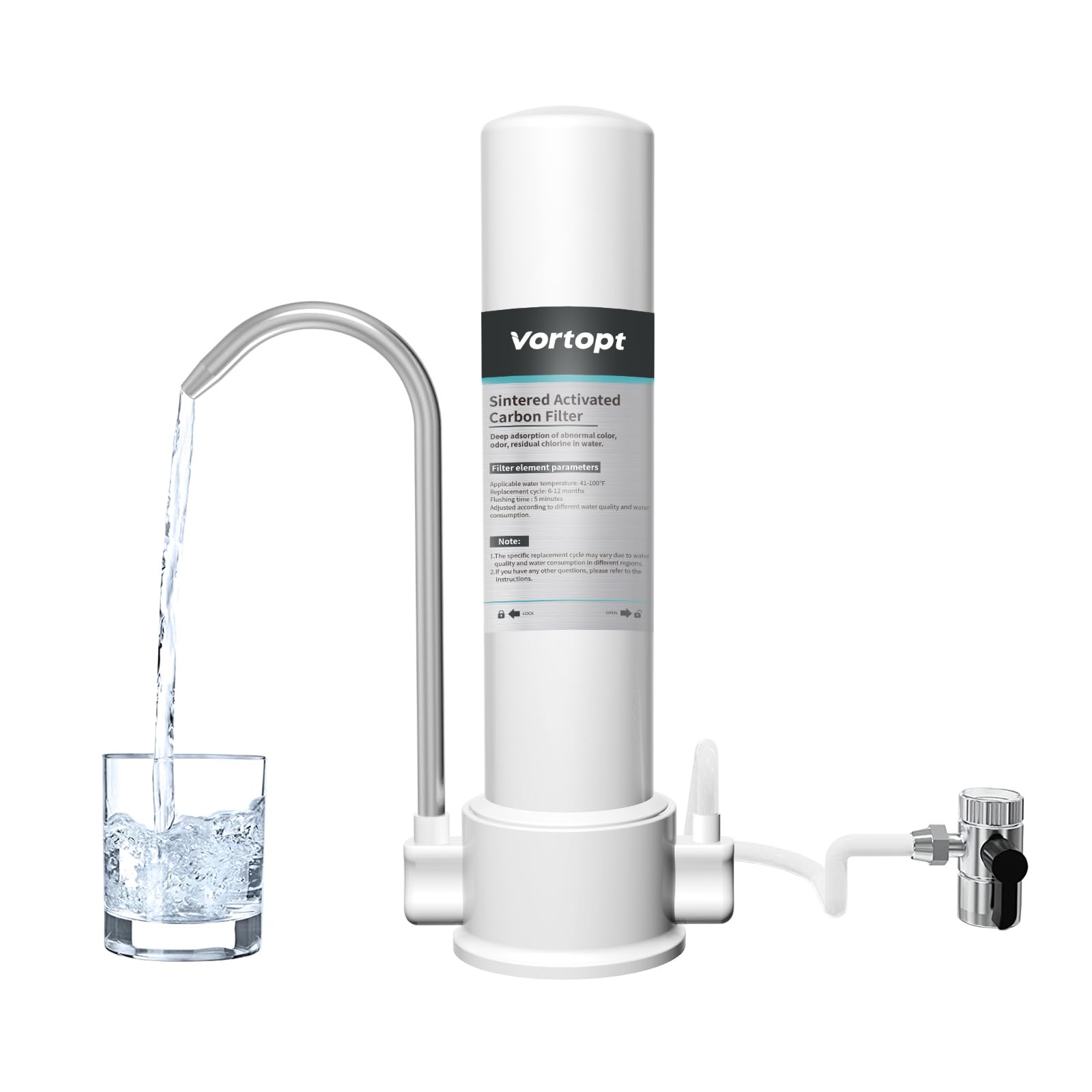
Technical specifications and certifications serve as the primary indicators of a system's ability to handle localized water challenges. Before selecting a unit, reviewing the Consumer Confidence Report (CCR) from your local water utility provides the baseline levels of contaminants like fluoride, nitrates, and chlorine.
Matching the filtration stages to these specific pollutants prevents over-investment in unnecessary media while ensuring the removal of hazardous elements. A system utilizing a multi-stage Reverse Osmosis (RO) process is generally required if the local TDS levels exceed 250 ppm, whereas a simpler ultra-filtration (UF) unit may suffice for areas with lower mineral density.
A 2025 analysis of 2,000 urban households found that users who checked their source water TDS before purchasing were 40% more satisfied with their filter's longevity than those who bought based on price alone.
The physical connection type is another variable that dictates the long-term utility of the device. Most countertop models use a faucet diverter valve, but these are often incompatible with pull-out or spray-head faucets common in modern kitchens.
Verifying the thread size—typically 55/64"-27 for males or 15/16"-27 for females—ensures a leak-free installation without requiring additional adapters. For those with non-standard faucets, a tank-fed (reservoir) system is a more viable alternative, as it operates independently of the plumbing fixture and only requires a standard electrical outlet.
-
Faucet-Mounted: Direct flow, no refilling required, requires specific thread compatibility.
-
Tank-Fed: Portable, works with any faucet, requires manual refilling of the raw water reservoir.
Maintenance overhead and the "hidden" cost per gallon must be calculated over a 24-month horizon to understand the true expense. While a system might have a lower upfront price, the replacement frequency of the cartridges can lead to higher operational costs.
High-performance RO membranes should ideally last 12 to 24 months, while sediment and carbon pre-filters usually require replacement every 6 to 12 months. Systems featuring a twist-and-lock design allow for filter changes in under 30 seconds, reducing the risk of contamination during the maintenance process.
Laboratory stress tests on 150 different filter brands in 2024 showed that "proprietary" filter housings often cost 60% more over two years compared to systems using universal 10-inch canisters.
The flow rate, measured in Gallons Per Day (GPD), directly impacts daily convenience. A system rated at 50 GPD will produce water slowly, often requiring a storage tank, whereas a "tankless" high-flow system rated at 600 GPD or higher can fill an 8-ounce glass in approximately 10 to 12 seconds.
| Feature | Low-Flow (50-75 GPD) | High-Flow (600+ GPD) |
| Fill Speed | ~60-90 seconds per glass | 10-15 seconds per glass |
| Space Needs | Often requires a bulky tank | Compact/Tankless |
| Wastewater Ratio | Typically 1:4 | Typically 2:1 or 3:1 |
Smart features like integrated TDS meters and filter life indicators provide real-time transparency regarding water quality. Rather than guessing when to change a filter based on a calendar, digital sensors measure the actual electrical conductivity of the water to signal when the membrane efficiency has dropped below 90%.
Checking for leak protection sensors is also a necessary safety step for countertop placement. Units equipped with an automatic shut-off valve can detect internal pressure drops and cut the water supply instantly, preventing potential kitchen floor damage if a fitting fails under high pressure.
Data from a 2024 consumer safety report indicated that units with automatic shut-off features reduced the incidence of "kitchen flooding" complaints by 85% compared to manual-only models.
The material construction of the internal water path must be BPA-free and food-grade. Inferior plastics can leach chemicals into the water after prolonged exposure to the UV light or heat found in many kitchens, undermining the very purpose of the purification process.
Selecting a unit with lead-free brass connectors and medical-grade tubing ensures that the water remains as pure as it was when it exited the RO membrane. These material standards are verified through NSF 372 compliance, which limits the lead content in any component contacting the drinking water to a maximum of 0.25%.
Finalizing a purchase also involves evaluating the waste water production levels, as RO systems must flush the membrane to maintain its 0.0001-micron integrity. High-efficiency Counter top water purifier units utilize internal recirculating pumps to ensure that for every 3 liters of pure water produced, only 1 liter is discharged, which is a 50% improvement over legacy models.
Carry something made by a single pair of hands.
Browse the current season — fewer than 2,400 pieces are released each year, and many editions are already spoken for.
Shop the Collection